

How can a spiritual entrepreneur work with local government to bring healing to marginalized communities? Collaboration with local government means partnering with public agencies and officials on programs that serve the people in your community. For a coach or healer, it can extend your work past your private client list to people who may never find a practitioner on their own. This article explains why that kind of service is also a business decision, what a recent review of research on local government partnerships found, and how to take a first step without draining the practice that supports you.
Service beyond your client list is a business decision
Most coaches and healers feel called to serve people who cannot afford their rates or who do not know their work exists. That calling is real, and it also draws on the same hours, energy and reputation as your paid work. A partnership with a public agency can raise your visibility in your community, build relationships with people who make decisions about local programs, and give you a way to use your gifts for people outside your client list. It can also consume time you have not budgeted. Treating it as a business decision means you choose its scope in advance so that the service and the practice support each other.
What research on local government partnerships found
A scoping review by Yashadhana and colleagues examined partnerships between local governments and health organisations in high-income contexts (Yashadhana et al., 2024). The authors searched four databases for studies published between January 2005 and July 2021. The search returned 3,472 studies, 188 of which underwent full-text review, and 29 papers were included. The review identified four themes in what shapes these partnerships: funding and resources, partnership qualities, governance and policy, and evaluation and measures of success. The authors examined the functional, organisational and individual aspects of those themes and presented them in a framework intended to help design and evaluate partnerships between health organisations and local governments.
The scope of the review matters. It covers partnerships between local governments and health organisations, and it does not study spiritual entrepreneurs, coaches or healers, so it cannot tell you how a private practice should approach a city or county office. What it provides is a map of the questions that partnerships of this kind have to answer. You can use that map as a set of questions for your own situation.
Four questions drawn from the review's themes
The four themes translate into four questions that a spiritual entrepreneur can answer before approaching any agency. This translation is my application of the review's themes, and it is not a finding of the review.
- Funding and resources. What will this project cost in hours and in money, who pays for it, and what can you afford to give without charge each month?
- Partnership qualities. What do you and the agency each want from the work, how will you communicate, and what would build trust between you?
- Governance and policy. Who decides what the project does, what rules does the agency work under, and what needs to be written down in an agreement?
- Evaluation and measures of success. How will you and the agency know the project helped, and what will you report?
Writing short answers to these questions before the first meeting changes how you present yourself. You arrive as a person who has thought about the work and its limits, which is what an agency needs from a partner.
Begin by listening to the community
Healing work with marginalized communities succeeds when it responds to what the community has said it needs. The distinction that separates a respectful partnership from a rescue effort is who defines the need. Before you propose anything, find out what the people you want to serve are already doing, what they have asked for and where they have said help is missing. Attend a public meeting, speak with community leaders and organizations that already serve the group, and ask what would be useful before you describe what you offer.
Listening also protects your credibility. An agency that sees you have taken the time to learn the community will treat your proposal as a contribution to existing work and will be less likely to treat it as an outside idea.
Make your offer clear to a public agency
Public agencies serve every resident of their area, so your proposal will be read by people who have not studied your methods. Describe what you do in plain terms that any resident can understand, state the outcome you are offering, and say how many people it serves, how often, and for how long. A proposal such as a free monthly stress-management session at a community center, with a clear time, place and purpose, is easier to evaluate than a general description of your healing philosophy. You keep your spiritual framework as the foundation of your own work, and you present the project in the language of its benefit to the community.
A first step you can take this week
These five steps move you from interest to a first conversation.
- Write one sentence describing the community you want to serve and the need you have heard them name.
- Identify the public agency or office whose work touches that need, using its website and the list of public meetings it publishes.
- Attend one public meeting or community event connected to that need and listen without pitching.
- Write short answers to the four questions above.
- Ask one person involved in the work for a short conversation about what the community needs, and ask what would be most useful.
Keep the partnership from draining your practice
A service project needs a limit. Decide how many hours a month you will give, put them in your calendar the way you place client sessions, and protect the paid work that funds your time. Decide in advance what would make you step back, such as a project that grows beyond your hours, and what you would say if that happens. A limit lets you say yes to a small, well-defined project, and a small project that you finish builds a reputation that opens the next one.
I take this up live on Friday, November 20 at 2:00 PM PT, and you can watch the live or replay here. My guest is Kristin Manna, a visionary entrepreneur, author, publicist and community advocate, the founder of Literary Launch Agency, and the Government Affairs Ambassador for the United Nations Association of Orange County. Another live on a related topic is called Authentic Marketing for Coaches: Why Polished Content Fails to Get Clients. You can find more about my work at Badass Butterfly Alchemy.
Which community would you most want your work to reach, and what have its members already told you they need?
Join the Spiritual Business Hour community for weekly episodes, free cheatsheets and a welcome gift.
References
- Yashadhana, A., Jaques, K., Chaudhuri, A., Pry, J., & Harris, P. (2024). Intersectoral partnerships between local governments and health organisations in high-income contexts: A scoping review. International Journal of Health Policy and Management, 13(1), 1-13. https://www.ijhpm.com/article_4559.html
Connect With The Spiritual Business Hour
Catch every live broadcast, past replay, and community discussion:
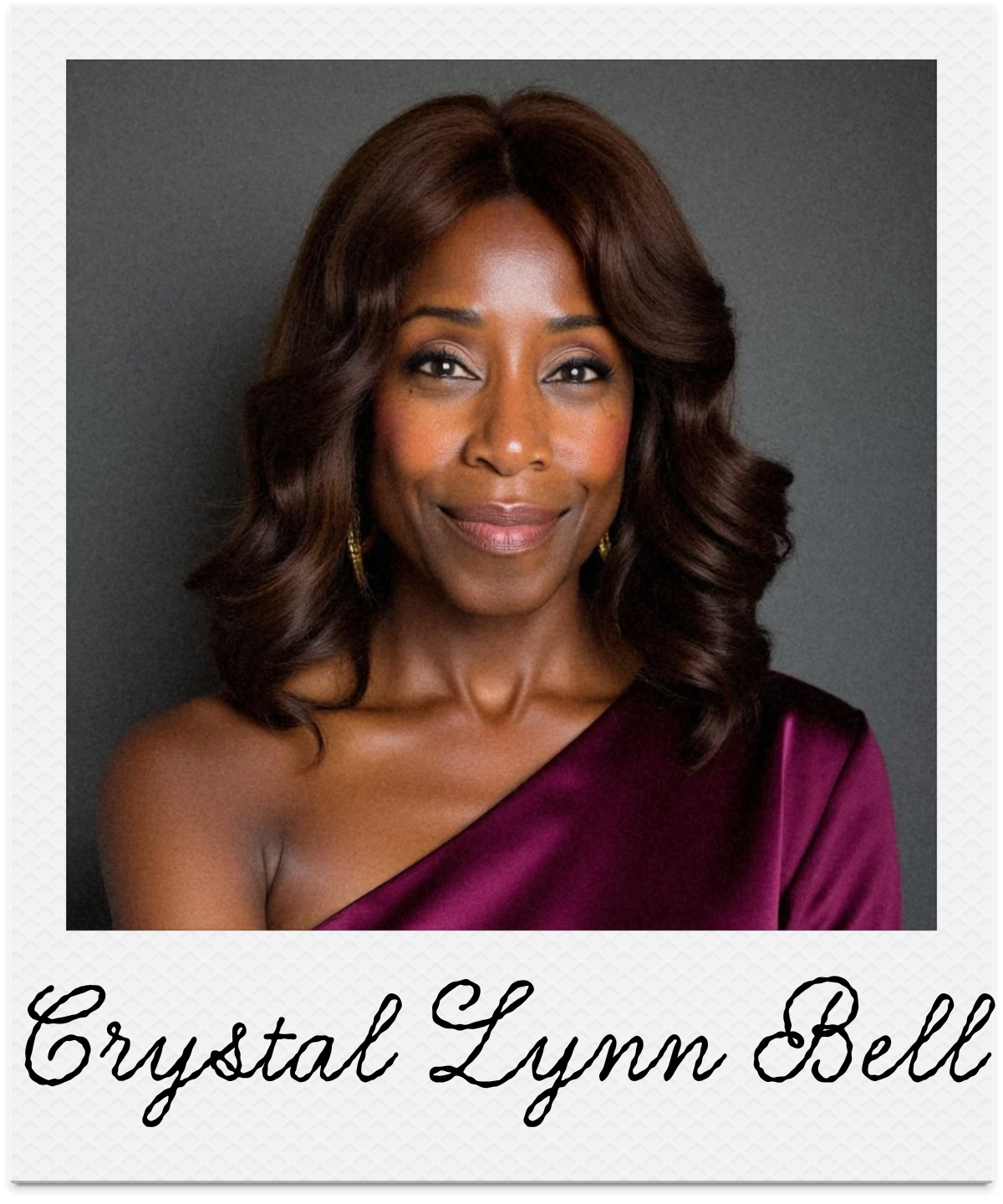
Crystal Lynn Bell
Founder of Badass Butterfly Alchemy
Visit www.badassbutterflyalchemy.com →Crystal Lynn Bell is a Spiritual Business Mentor, visibility coach, and founder of Badass Butterfly Alchemy Coaching. Her work sits at the intersection of deep inner transformation and serious business architecture. Since 2011, she has guided more than 800 women through the process of building coaching businesses grounded in their genuine experience and designed to produce real, sustainable income.