
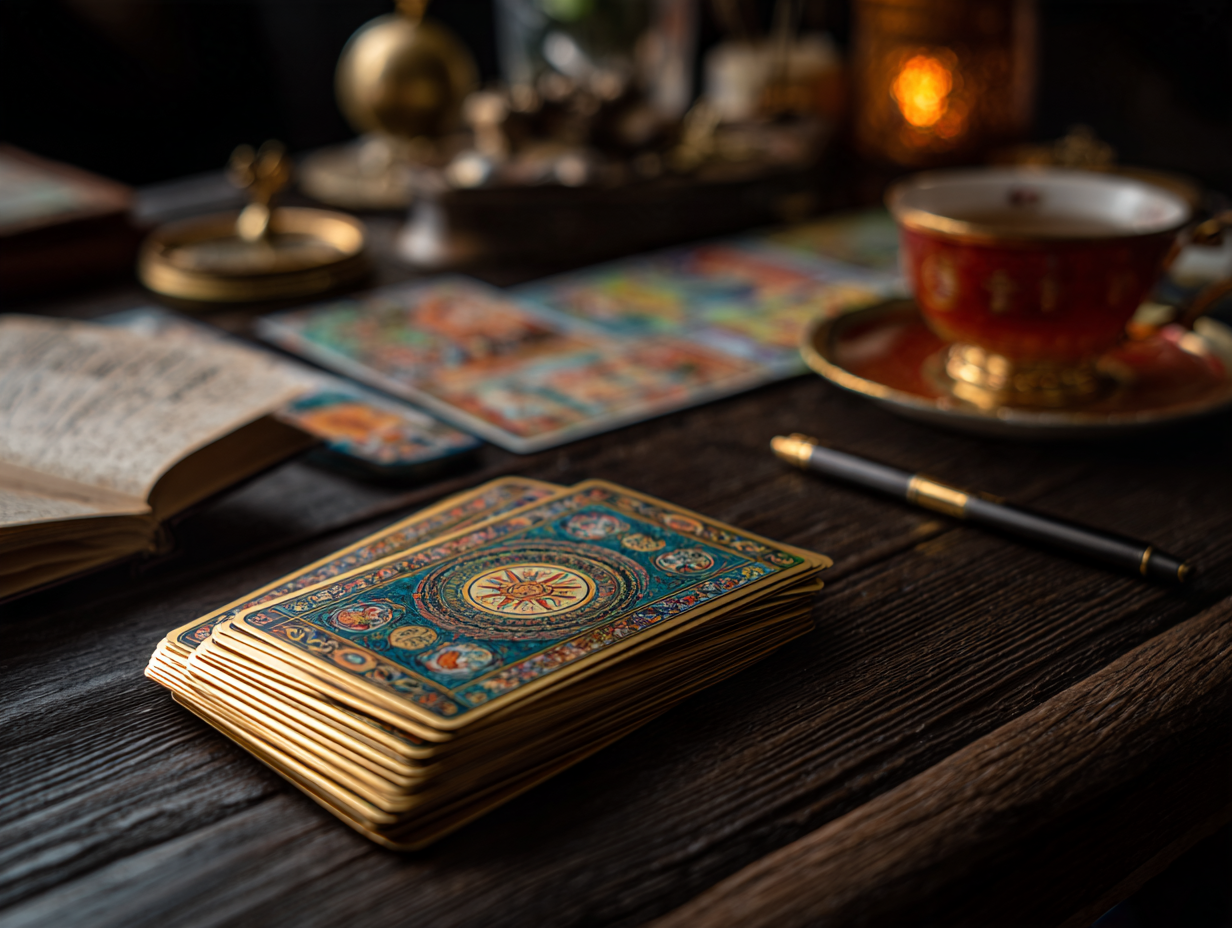
Can oracle card readings help you make better business decisions, or are they a pleasant ritual that sits beside your real strategy?
If you are a coach, healer or intuitive who is building a business, you probably use your intuition every day. You sense which client is ready, which offer feels alive and which opportunity is wrong for you. The difficulty is that a business also asks for decisions about prices, calendars and contracts, and those decisions can feel far from the inner voice you trust. I want to show you how an oracle card reading can work as a bridge between the two, and where it stops being useful.
An oracle card reading is a way to reflect on a decision
An oracle card reading is a practice of drawing a card and reflecting on its message to hear your intuition and see a decision from a new angle. The card is a prompt. It gives you an image and a few words, and your mind responds with associations, feelings and memories that may not have come up while you were working through the problem in a spreadsheet. The value sits in your response to the card. The card gives you something to respond to.
This definition keeps the decision with you. A card cannot tell you whether your launch will sell or whether a partnership will work. It can help you notice what you already think and feel about the question.
Many people use tools like this, and most use them lightly
Pew Research Center's 2025 report, 3 in 10 Americans consult astrology, tarot cards or fortune tellers, found that about 30 percent of U.S. adults consult at least one of those at least once a year. The survey was conducted October 21 to 27, 2024 with 9,593 adults. About 20 percent of adults said they do it mostly for fun, and about 10 percent said they mostly believe it gives helpful insights. Only 1 percent said they rely on these practices a lot for major life decisions.
The survey covers astrology, tarot and fortune tellers, so it does not measure oracle card readings in particular, and it says nothing about business. I use it to make one point. Reaching for a card is a common human behavior, and most people who do it treat it as a reflective practice and keep the final decision for themselves. That is the way I recommend using it in your business.
Intuition is a real form of judgment, and it has limits
Researchers who study decision making take intuition seriously. Dane and Pratt (2007) define intuition in managerial decision making as "affectively charged judgments that arise through rapid, nonconscious, and holistic associations." Their review also notes that how well intuition works depends on factors including a person's domain knowledge, how much they have learned from experience and the characteristics of the task. That work is about managers and their decisions in general, and it does not study card readings.
I draw two practical lessons from it. The first is that your intuition about your own business is worth listening to, particularly in areas where you have deep experience. The second is that intuition works better when it has something to work with, such as real knowledge of your clients and your numbers. A card can help you hear your intuition, and the quality of what you hear still depends on what you know.
A card can help you hear your intuition, and the quality of what you hear still depends on what you know.
How to use a card for a business decision
Try this process the next time you face a choice:
- Write the decision as a question. For example, "Should I move my group program to the spring?" A specific question gives your response something to attach to.
- Write down the facts. List your numbers, your calendar, your capacity and what you know about your clients' needs. Do this before you draw a card.
- Draw one card and write your first reaction. Record what you feel in your body and what thoughts arrive, including any resistance. Write for a few minutes without editing.
- Compare the reaction to the facts. Notice where they agree and where they pull in different directions. A strong feeling that disagrees with the numbers deserves a closer look at both.
- Choose a small next step and a date. The card has done its job when it helps you act. Choose something you can test within a week.
Which decisions suit a card and which need other tools
Cards suit questions where your own sense of direction is the missing piece: which of two offers to build first, how to describe your work in your own voice, whether a collaboration feels right, how you want your week to feel. They give you a way to listen when the facts are balanced and the choice depends on what you want.
Other decisions need other tools. Pricing needs your costs and your income goals. Contracts need careful reading, and often the review of a qualified professional. Taxes and legal obligations need accurate information from the right source. In those areas, a card can still help you notice how you feel about the decision, and the answer itself has to come from facts.
Intuition and infrastructure work together
This is the idea I return to most often. Your intuition tells you where to go, and your business structure gives that guidance somewhere to land. If a card reading helps you realize that you want to serve a new kind of client, you still need an offer, a way for that client to find you and a follow-up plan. Without those, the insight stays a nice moment on a Tuesday morning. With them, the insight becomes a program, a price and a calendar date.
The reverse matters as well. A business with excellent systems and no connection to your inner voice tends to feel hollow to the woman running it. Using both is what makes the work sustainable.
A two week experiment
Pick one decision you have been circling. Follow the five steps above once, and record what you notice. After two weeks, review what you decided, what you did and how it turned out. Pay attention to whether the card helped you hear something you had been ignoring, and whether it helped you move. If it did, you have a tool worth keeping. If it did not, you have learned what kind of reflection works best for you.
An earlier live you may find useful is called Feminine Energy Launching vs Masculine Launch Strategy for Coaches. I teach spiritual business building through Badass Butterfly Alchemy, where you can find more about my work.
Renee McDonald, an author, speaker, therapist and integrative coach with over two decades of experience, joins me live on Thursday, November 12 at 2:00 PM PT to explore how oracle card readings can support the decisions of a business builder. You can find her Prime Matches Card Deck at reneemcdonald.com, and you can watch the live or replay here.
Which decision in your business could use a new angle?
Join the Spiritual Business Hour community for weekly episodes, free cheatsheets and a welcome gift.
References
- Dane, E., & Pratt, M. G. (2007). Exploring intuition and its role in managerial decision making. Academy of Management Review, 32(1), 33 to 54. https://profiles.wustl.edu/en/publications/exploring-intuition-and-its-role-in-managerial-decision-making/
- Pew Research Center. (2025, May 21). 3 in 10 Americans consult astrology, tarot cards or fortune tellers. https://www.pewresearch.org/religion/2025/05/21/3-in-10-americans-consult-astrology-tarot-cards-or-fortune-tellers/
Connect With The Spiritual Business Hour
Catch every live broadcast, past replay, and community discussion:
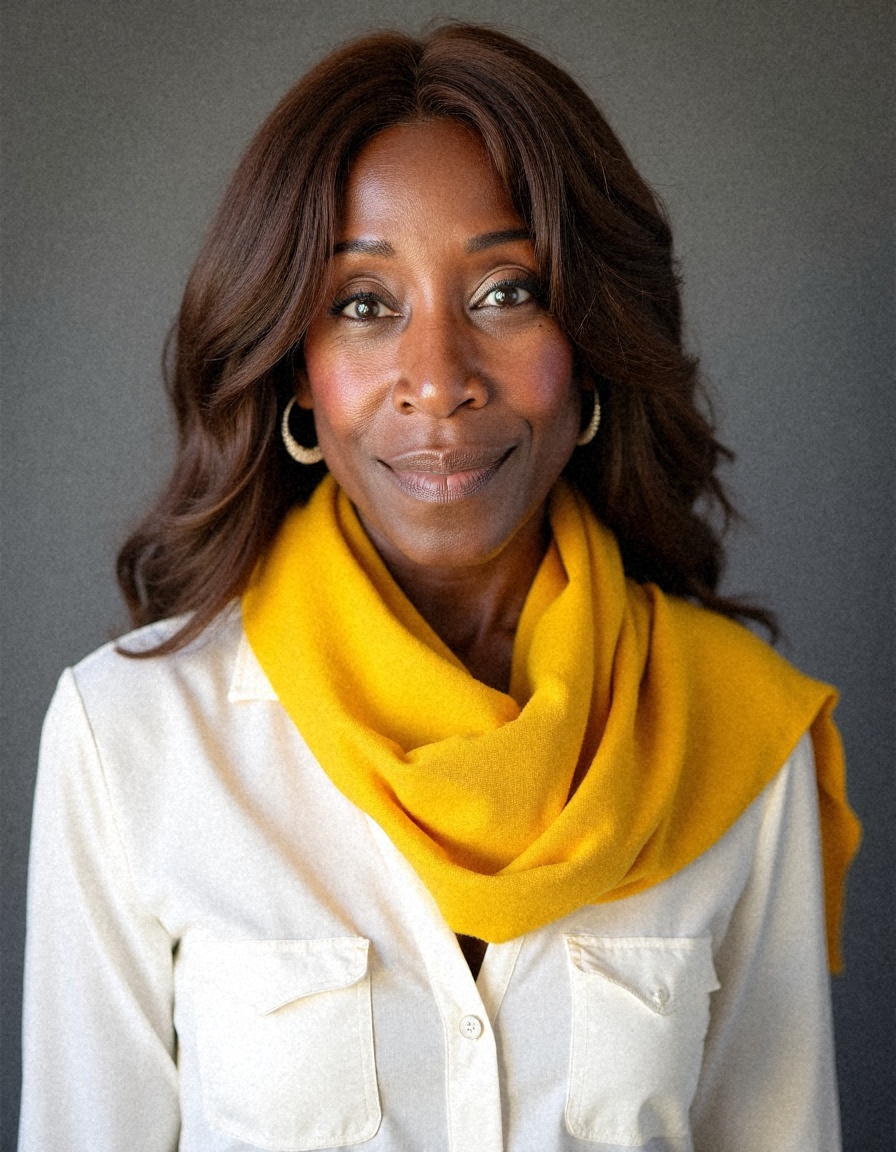
Crystal Lynn Bell
Founder of Badass Butterfly Alchemy
Visit www.badassbutterflyalchemy.com →Crystal Lynn Bell is a Spiritual Business Mentor, visibility coach, and founder of Badass Butterfly Alchemy Coaching. Her work sits at the intersection of deep inner transformation and serious business architecture. Since 2011, she has guided more than 800 women through the process of building coaching businesses grounded in their genuine experience and designed to produce real, sustainable income.