
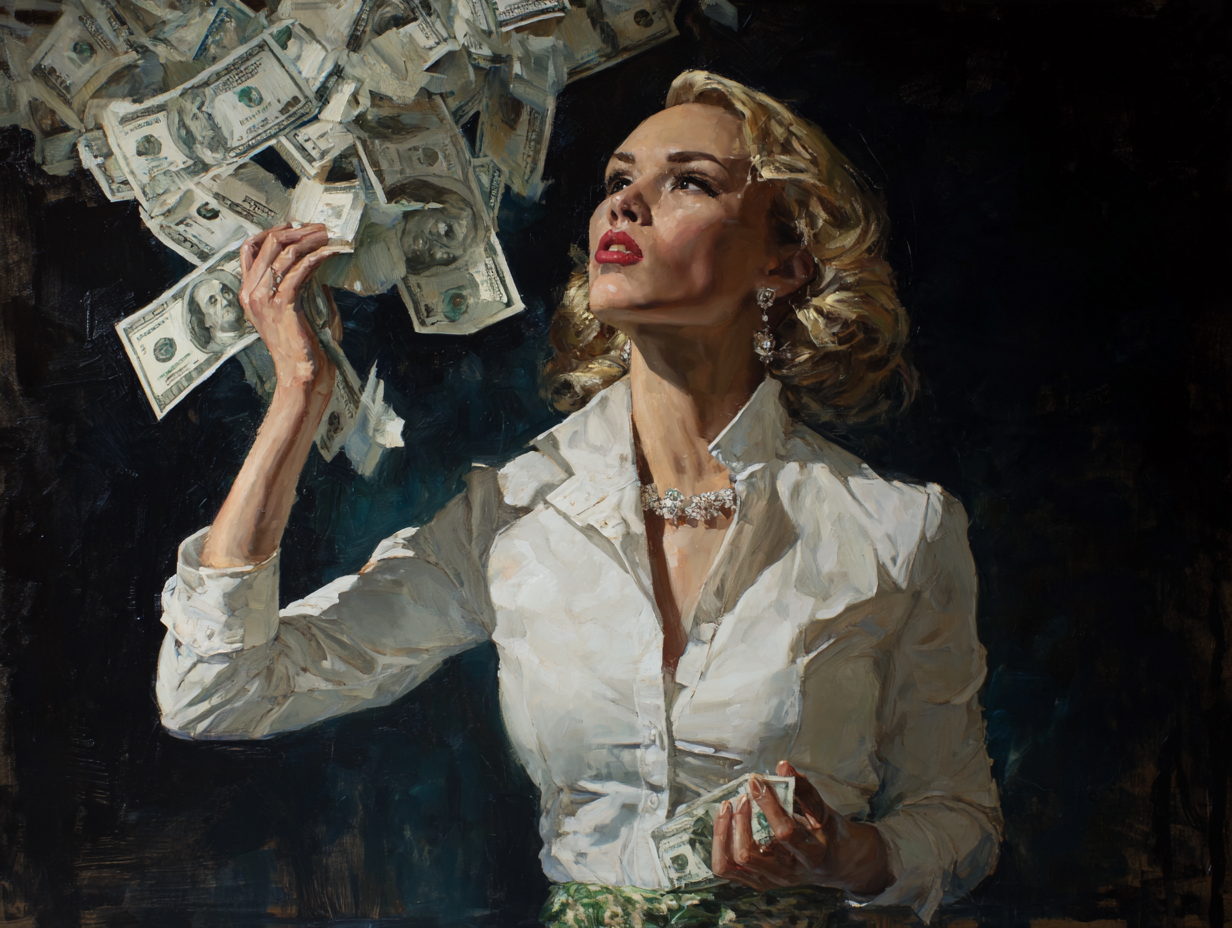
Why does investing in yourself feel so frightening, even when you believe the program, the coach or the tool would help? Financial vulnerability is the uncertainty, risk and exposure you feel when you commit money to your own growth before you know the result. Brené Brown defines vulnerability as "uncertainty, risk, and emotional exposure," and each of the three parts is present in the moment before you pay. This article uses her definition to explain the fear, separates the fear from the decision, and gives you a practice for deciding with a clear head.
The fear has three parts, and each part has a source
Uncertainty is not knowing whether the investment will work. You cannot see the result in advance, and no testimonial changes that. Risk is the possibility of losing the money, which is real because the money has other uses in your household and in your business. Emotional exposure is the part many coaches and healers underestimate. When you invest in your growth, you admit that you want more than you have, and you let other people see you try something that may not work.
The three parts call for different responses. Uncertainty is reduced by gathering facts, risk is managed by deciding how much you can afford to lose, and exposure is addressed by inner work. When all three arrive together as a single feeling of dread, it is easy to read the dread as a verdict on the investment. It is more accurate to read it as a description of what the investment asks of you.
Being new at something is where vulnerability peaks
In an episode of her podcast Unlocking Us, Brown says that being new at something is the epitome of vulnerability (Brown, 2020). The excitement of deciding to try something new is followed by an awkward, uncomfortable stretch, and she says she has seen people become so afraid of that stretch that they stop doing anything they are not already good at. She also says that the more willing people are to try new things, the more new things they are willing to try, because they learn to normalize discomfort. Being new does not become comfortable.
An investment in yourself almost always puts you in the position of being new. You hire a mentor because you have not built the system yet, you enroll in a program because you have not learned the skill yet, and you buy the software because you have not run the launch yet. Part of the fear of spending the money is the fear of being a beginner in front of someone who is not, and that part belongs to vulnerability and has little to do with finance.
Identify the fear to take its power away
Brown says that many people avoid identifying a hard feeling because they believe identifying it gives it power. She disputes this, saying that when you identify and own a hard feeling, it gives you the power. For first-time experiences she describes three steps that she uses personally and professionally: normalize the feeling, put it in perspective, and reality check your expectations. Applied to an investment in yourself, the steps look like this.
- Normalize it. Tell yourself that this is how a significant first investment is supposed to feel.
- Put it in perspective. The feeling is temporary, and it says nothing about your ability to handle money.
- Reality check your expectations. Expect the work to take longer and ask more of you than you first imagine, and plan your time and your cash for that.
The scope of the source matters here. Brown's episode is about first-time experiences in general, and she does not discuss purchases or financial decisions in it. Applying her steps to money is my extension of her framework. The definition and the three steps are hers, and the application to a program, a coach or a piece of software is mine.
Some fear is information
Not every hesitation is vulnerability. Sometimes the fear tells you that the price exceeds your cash reserves, that the offer is unclear, or that the person selling it has not shown you how past clients used it. A sound decision needs both the discomfort that comes with growth and the facts about the investment, and the two are easy to confuse.
The distinction that separates them is a question: what would I need to know that I can actually find out? If an answer exists, such as the refund terms, the structure of the program, the time it asks of you each week or the experience of people who have used it, get the answer before you decide. If the question can only be answered by doing the work, you are facing uncertainty, and no amount of research will remove it. Treating uncertainty as a research problem is how people spend months comparing options while the decision stays open.
A practice for deciding
This practice takes about an hour and puts the decision on paper.
- Write the amount and what it is for in one sentence.
- Write one sentence each for uncertainty, risk and exposure, describing how each one shows up for this investment.
- List the questions that facts can answer, and answer them before you decide.
- Decide the largest loss you could accept without harming your household or your business, and compare it to the amount.
- Choose a decision date, and choose one signal that will tell you after ninety days whether the investment is working.
- Decide, and tell one trusted person what you decided and why.
If the exposure is the loudest part after you have finished the list, that is inner work, and a financial plan will not settle it. Give it its own time, because the fear will return at the next investment if it goes unexamined.
Why this matters for the business you are building
A business grows through a series of first times: a first offer, a first launch, a first hire and a first large investment in support. The practice you build around this investment is the one you will reuse for the next. A coach or healer who learns to feel the fear, identify its three parts and decide on facts can invest on a schedule that her business needs. One who waits until the fear disappears will wait indefinitely, because being new does not become comfortable, and the willingness to stand in the discomfort is what changes.
I take this up live on Tuesday, November 17 at 2:00 PM PT, and you can watch the live or replay here. Another live on a related topic is called Spiritual Laws of Wealth for Women Entrepreneurs With Monique Alvarez. You can find more about my work at Badass Butterfly Alchemy.
Which part of the fear is loudest for you right now: the uncertainty, the risk or the exposure?
Join the Spiritual Business Hour community for weekly episodes, free cheatsheets and a welcome gift.
References
- Brown, B. (2020, March 20). Brené on FFTs [Audio podcast episode]. In Unlocking Us. Brené Brown Education and Research Group. https://brenebrown.com/podcast/brene-on-ffts/
Connect With The Spiritual Business Hour
Catch every live broadcast, past replay, and community discussion:
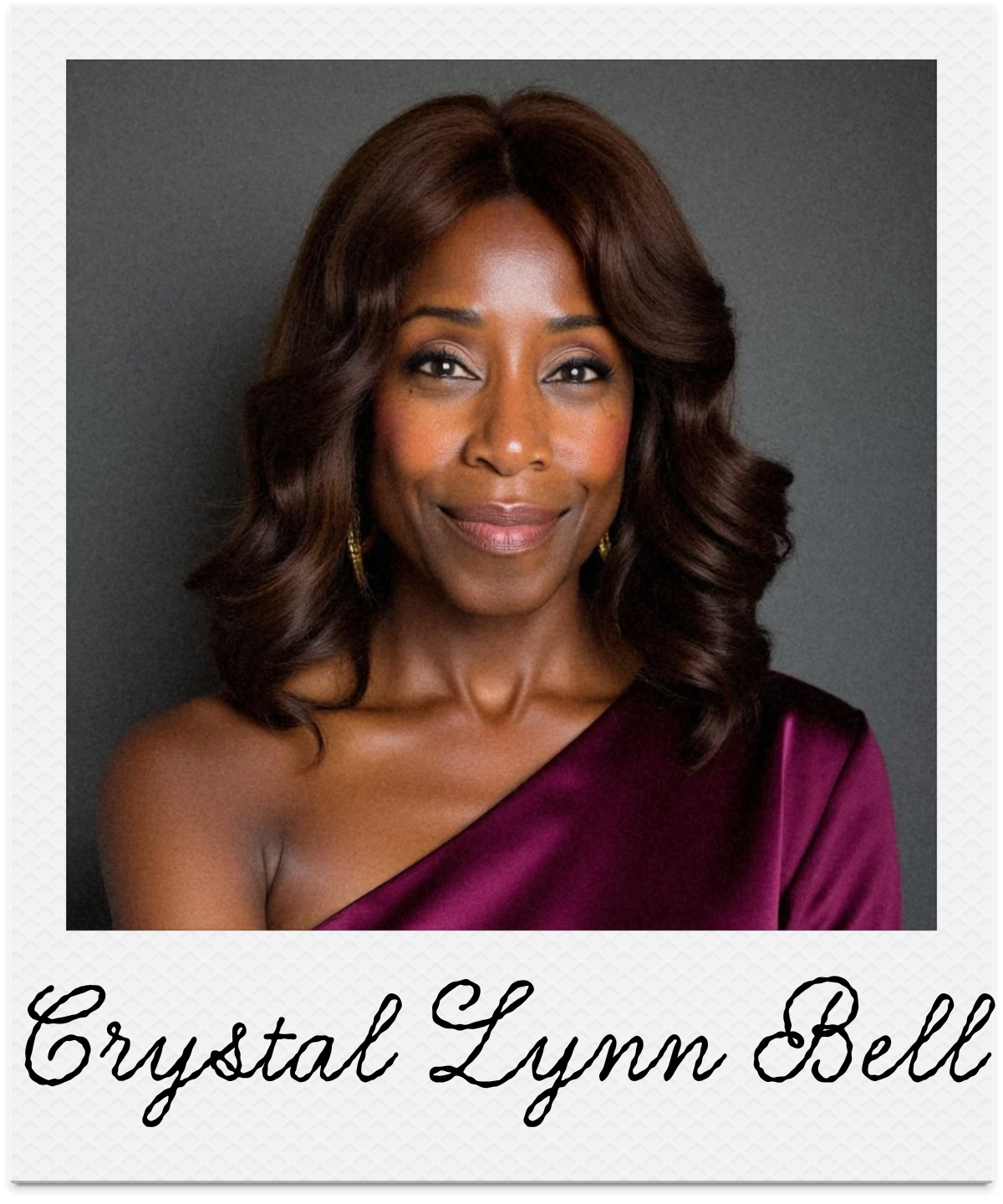
Crystal Lynn Bell
Founder of Badass Butterfly Alchemy
Visit www.badassbutterflyalchemy.com →Crystal Lynn Bell is a Spiritual Business Mentor, visibility coach, and founder of Badass Butterfly Alchemy Coaching. Her work sits at the intersection of deep inner transformation and serious business architecture. Since 2011, she has guided more than 800 women through the process of building coaching businesses grounded in their genuine experience and designed to produce real, sustainable income.