

How do you write a book as a coach when you carry decades of wisdom and cannot find the first sentence?
Many women in midlife who coach and heal hold a body of understanding that took a lifetime to earn, and the book that would carry it stays unwritten because the blank page feels larger than the knowledge. Channeling a book from the Akashic records offers another way in. The Akashic records are understood in spiritual traditions as an energetic record of every soul's experience and wisdom, and channeling from them means asking that record for guidance on your message and writing down what arrives, in your own voice, as your own work. This article explains where the idea comes from, how channeling works as a writing practice, and how to turn what you receive into a finished book that brings you clients.
Where the idea of the Akashic records comes from
The word akasha comes from the Sanskrit ākāśa, which can be translated as space, atmosphere or sky and which appears in several Indian philosophical systems as an element or a foundation of existence. The idea of a record, an archive in which everything that has happened is preserved, is more recent. The researcher Alex Nash traces it to the Theosophical Society, founded in 1875, whose members took the Indian term and gave it a new meaning. He notes that an early form of the archival idea appears in Henry Steel Olcott's 1881 Buddhist Catechism, which speaks of a permanence of records in the ākāsha that a person of true enlightenment might one day read. Nash concludes that what is called the Akashic records today is a metaphysical interpretation of ākāśa, brought about by the influence of the Theosophical Society, and that the term has long since lost its connection to physical reality (Nash, 2019).
That history matters to a coach for a practical reason, because it tells you what kind of thing you are working with. The Akashic records are a spiritual concept, held by the people who practice with them as a way of receiving guidance. They belong to belief and personal experience, and they have not been established by scientific research. You do not need to settle that question in order to benefit from the practice this article describes, because the practice rests on something you can test for yourself, which is what happens on the page when you ask a sincere question and write without interruption.
Why a book is the clearest front door for a coach
A book answers the question every prospective client carries into a first conversation, which is whether you understand her. It lets her sit with your thinking at her own pace and decide whether you are the person she has been looking for. It also gives your business a lasting asset. A post is seen for a day and an episode for a season, while a book can be handed to a stranger, quoted by a colleague and found years later by a woman who needed it. A coach or healer sells her way of seeing, and a book is the most complete statement of that way of seeing, which is why so many practitioners carry one for years without writing it.
A coach sells her way of seeing, and a book is the most complete statement of that way of seeing.
Channeling as a writing practice
Whatever you believe about the source, channeled writing has a recognizable structure. You arrive with a question, you enter a state of settled attention, and you write what comes without stopping to judge it. That structure is very close to freewriting, the technique the writing teacher Peter Elbow advanced in his 1973 book Writing Without Teachers. In Elbow's account, freewriting means writing without stopping and without editing, and he recommends doing it regularly, at least three times a week, because the practice undoes the ingrained habit of editing while you are trying to produce (Elbow, 1973). The reason it works is that producing words and criticizing them are two different mental acts, and attempting both at once is what makes the blank page feel impossible.
This is where a spiritual practice and a craft practice meet. The craft practice supplies the mechanism, which is continuous writing with no critic in the room. The spiritual practice supplies the orientation, which is the question you bring, the reverence with which you bring it and your willingness to receive an answer you did not plan. Together they give you what neither gives alone, a way to begin that feels both safe and alive.
A practice you can begin this week
- Choose one reader. Picture a single woman who needs your book and hold her clearly in mind, including the situation she is in and the words she would use to describe it.
- Choose one question. Ask what she most needs to understand, and what you know about that which no course ever taught you.
- Open the session. Use whatever practice you already trust, whether that is a prayer, a few slow breaths or a short ritual, and state your intention aloud, that you are asking for guidance on the message this reader needs.
- Write for a fixed time without stopping. Ten minutes is a common starting point. Keep your hand moving, and when you run out of words, write the last word again until the next thought arrives. Elbow's remedy for flat pages is to keep writing anyway.
- Close the session and set the pages aside. Read them the next day with a pen in your hand, and mark the sentences that surprised you, the ones that sound most like you at your wisest.
Do this three times in a week and you will have raw material and a clear sense of which themes keep returning. Those themes are the beginnings of your chapters.
Turning raw pages into a book
Gather the themes that returned across your sessions, give each a working title that names the question it answers, and arrange them in the order a reader would need them, so that each chapter prepares her for the next. Then comes the second half of the process. Elbow pairs free writing with careful revision afterward, and the revision is where you become the critic. Cut repetition, tighten sentences, check each claim against your own experience, and add the stories and examples that make an idea usable. Keeping the two stages apart is what allows the first to stay open and the second to stay exacting.
A book that reaches readers
A finished manuscript still needs a plan for reaching the women who are searching for what you know. Decide what form the book will take, whether a free chapter that introduces your work, a short guide or a full book. Decide who will receive it first, and decide what the next step is for a reader who finishes it. For a coach, that next step is the point of the whole project. The book introduces you, and an invitation at the end gives the reader a way to continue with you.
If you want to see another way a practitioner turns intuitive work into something a client can hold, my earlier episode, How Creating a Card Deck Makes You the Authority Behind Your Intuition, explores a different way of giving intuitive work a lasting form. And if you want help building the structure around a book, from the messaging to the path that brings readers to you, that is the work I do with women coaches at badassbutterflyalchemy.com.
Today's conversation
I take this up live at 2:00 PM PT today, and you can watch the live or replay here.
What does your book already know that you have not yet put into words?
Join the Spiritual Business Hour community for weekly episodes, free cheatsheets and a welcome gift.
References
- Elbow, P. (1973). Writing Without Teachers. Oxford University Press. Excerpt on freewriting: https://www.research.ucsb.edu/sites/default/files/RD/docs/FREEWRITING-by-Peter-Elbow.pdf
- Nash, A. (2019). The Akashic Records: Origins and Relation to Western Concepts. Central European Journal of Contemporary Religion, 109-124. https://karolinum.cz/data/clanek/8423/CEJCR_3_2_0109.pdf
Connect With The Spiritual Business Hour
Catch every live broadcast, past replay, and community discussion:
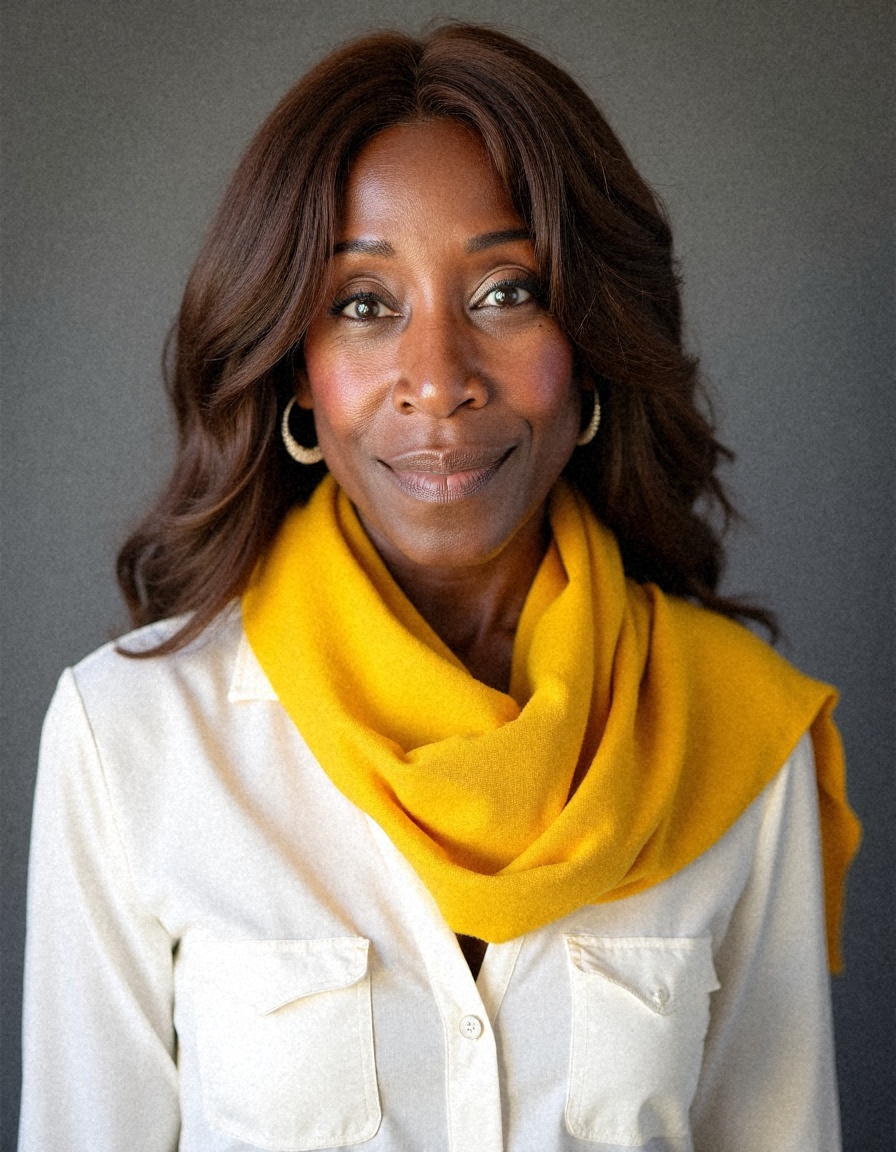
Crystal Lynn Bell
Founder of Badass Butterfly Alchemy
Visit www.badassbutterflyalchemy.com →Crystal Lynn Bell is a Spiritual Business Mentor, visibility coach, and founder of Badass Butterfly Alchemy Coaching. Her work sits at the intersection of deep inner transformation and serious business architecture. Since 2011, she has guided more than 800 women through the process of building coaching businesses grounded in their genuine experience and designed to produce real, sustainable income.