

What would change in your business if your authority showed up on the page every week? That question sits underneath how to build a 6-figure coaching business through a consistent writing practice. A consistent writing practice is a steady schedule of writing that shows prospective clients how you think and how well you know your subject, before any of them books a call. This article explains how a messaging framework decides what you write about, how a content calendar turns those topics into pieces that draw readers in, and why consistency is the part that turns writing into authority and, over time, into income. I take this up live on Monday, November 16 at 2:00 PM PT, and you can watch the live or replay here.
Writing is where your authority becomes visible
Many prospective clients form a view of a coach before they ever speak to one. They read what you have written, they listen to what you have said in public, and they compare your thinking with what they already believe. Writing gives them the most direct view of that thinking, because a piece of writing has to take a position, give its reasons and arrive at a conclusion. A reader who reaches the end of one of your pieces knows how you approach a problem, which a list of services or a short biography cannot show.
This is also where coaches and healers can present themselves as the professionals they are. You bring training, years of practice and a particular way of understanding your clients' situations, and writing is the place to put that expertise in order so that a reader can follow it. The woman in midlife who is building her business already has the expertise that prospective clients look for, and regular writing is how it becomes visible to them. If you would like a wider view of authority as well, my live called How To Boost Your Authority as a Coach: 7 Ways to Start Now is a good companion to this article.
A messaging framework decides what you write about
A messaging framework is the deep work you do before you write. You identify the topics that matter most to your ideal client, and you decide how you will talk about them. Without that work, topics tend to be chosen by whatever feels easy that week or by what other coaches are posting, and the writing wanders. With it, each piece answers a question your ideal client is already asking.
You can begin with three lists. Write down the questions your ideal clients ask in first conversations, the decisions they are trying to make when they find you, and the results they describe in their own words. Look for the topics that appear on more than one list, because those are the ones that matter most to them. Choose a small number of those topics to build your writing around, and use the words your ideal client uses to describe each one, so that a reader recognizes their own situation in your first sentence.
A content calendar turns those topics into writing that attracts curiosity
A content calendar is a plan for what you write and when, so that each piece has a purpose and a place in your larger body of work. Built from the topics in your messaging framework, it spares you from deciding on a Tuesday morning what to write about, and it lets a reader who finds one piece see where to go next.
Curiosity comes from how a piece begins. A reader keeps going when the first lines describe a problem the way they would describe it and promise an answer worth reaching. Give every piece one job, such as attracting a new reader, building trust with someone who already follows you, inviting a reader to an offer or serving a client you already have, and give it one next step, such as a related article or an invitation to a conversation. Over a year, a calendar with a mix of jobs gives you a library where new readers can find you and where the people who already follow you can see how your ideas connect.
Consistency is what turns writing into authority
A single excellent piece shows a reader what you can do, and a steady schedule shows them what to expect from you. Research from two different fields points in the same direction, and each has limits that are worth stating.
The first is research on business buyers. In the 2024 Edelman and LinkedIn study of about 3,500 business decision-makers, 73 percent said an organization's thought leadership is a more trustworthy basis for judging its capabilities than its marketing materials, and about 60 percent said they would pay more for organizations that provide useful thought leadership (Edelman, 2024). The study surveyed corporate buyers about attitudes they reported themselves, and its sponsors have an interest in thought leadership, so it supports the principle that substantial writing builds trust and does not predict how long it will take a coach to see results.
The second is research on habits. Phillippa Lally and her colleagues followed 82 people who each repeated a chosen health behaviour daily for 84 days, tied to a daily cue, and tracked how automatic the behaviour felt (Lally et al., 2010). Skipping a single day had little effect on progress, while missing many repetitions lowered the level of automaticity that people reached. The average time to reach a peak was 66 days, with individual results ranging from 18 days to a projected 254 days, and about half of the participants had not reached a level that counted as a habit by day 84. The participants were mostly undergraduates, and the behaviours were eating, drinking and exercise, so the study cannot tell you how long a writing practice takes. It does give three practical lessons: tie your writing to a fixed day and time, return to the schedule after a missed day without treating it as a failure, and expect the first months to take effort.
Authority grows through repetition, because each piece you publish adds to what a reader already knows about how you think.
A 6-figure business is the sum of the offers your writing leads to
Writing builds attention and trust, and your offers turn them into income, so the arithmetic of a 6-figure business starts with your offers. A 6-figure year is $100,000, which is about $8,300 a month. Divide $100,000 by the price of an offer and you have the number of people who need to say yes in a year. Then ask what kind of audience that number requires, and how many people must read your writing, trust it and feel ready before that many of them enroll.
Income follows writing with a delay. For that reason, measure the year by what you control: the number of pieces you publish and the number of readers who reply, ask a question or book a conversation. Keep your current clients while the library grows. When the writing begins to produce conversations, you can decide which offer to place in front of those readers. The timeline for reaching a 6-figure year depends on your audience, your offers and how consistently you publish, so I would not promise one.
Three questions about a consistent writing practice
How often should I write? Choose the number of pieces per week that fits your current client load, and put the writing in your calendar as an appointment with a day, a start time and a length. One piece a week is a workable start when your calendar is already full, and the habit research above found that one missed repetition had little effect on progress, so you can return to the schedule at your next appointment.
What if I do not know what to write about? Begin with the question your ideal client asks you most often and answer it in full. That question is already a topic that matters to them, and your answer is already your expertise, so the first piece is mostly a matter of putting it in order.
How long before my writing brings in clients? The research above gives no timeline for coaches, and I will not invent one. What you can do is track the two measures from the section before this one and review your schedule every twelve weeks, lowering the number of pieces if the pace is too heavy and keeping the day.
Join me live today
I take this up live today at 2:00 PM PT, and you can watch the live or replay here. My guest is Eleanore Strong, a business strategist who helps talented coaches and service providers craft the content and offers that attract sophisticated clients for their highest-level work, and she joins me for a conversation about a writing practice that expresses your authority. I am a Spiritual Business Mentor who helps heart-centered women coaches and spiritual healers nail their messaging, marketing and infrastructure so they attract consistent clients and income, and you can find more about my work at Badass Butterfly Alchemy.
What is the first piece you would write if you knew it was building your authority?
Join the Spiritual Business Hour community for weekly episodes, free cheatsheets and a welcome gift.
References
- Edelman. (2024, February 28). Thought leadership gets B2B buyers back into the game. https://www.edelman.com/insights/thought-leadership-gets-b2b-buyers-back-into-game
- Lally, P., van Jaarsveld, C., Potts, H., & Wardle, J. (2010). How are habits formed: Modelling habit formation in the real world. European Journal of Social Psychology, 40(6), 998-1009. Summarized by the British Psychological Society Research Digest: https://bps.org.uk/research-digest/how-form-habit
Connect With The Spiritual Business Hour
Catch every live broadcast, past replay, and community discussion:
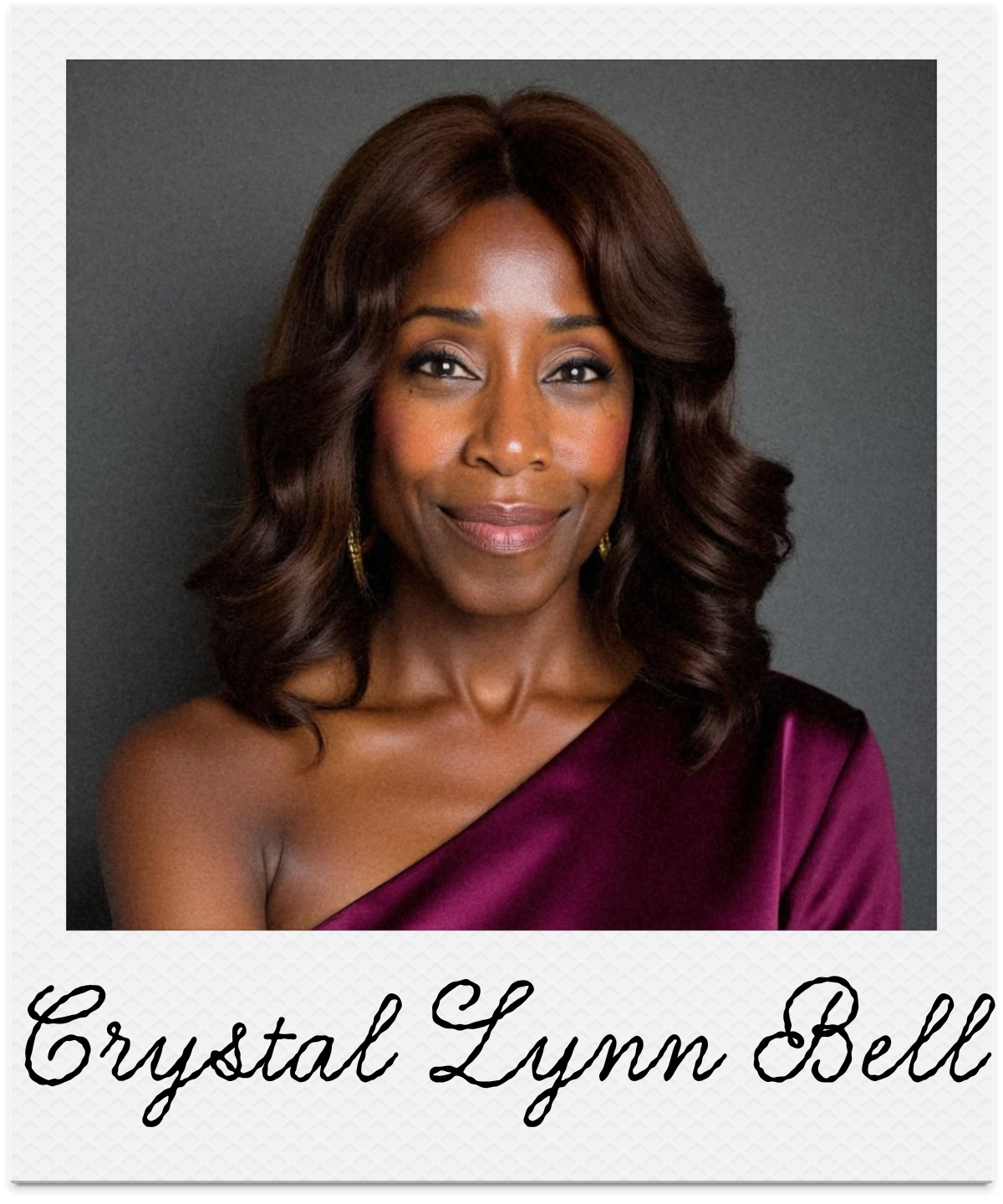
Crystal Lynn Bell
Founder of Badass Butterfly Alchemy
Visit www.badassbutterflyalchemy.com →Crystal Lynn Bell is a Spiritual Business Mentor, visibility coach, and founder of Badass Butterfly Alchemy Coaching. Her work sits at the intersection of deep inner transformation and serious business architecture. Since 2011, she has guided more than 800 women through the process of building coaching businesses grounded in their genuine experience and designed to produce real, sustainable income.