

What does it mean to go beyond manifestation and work with your biological blueprint, and can frequency, sound and meditation influence the pattern your body follows? In this article, your biological blueprint is the pattern your cells follow, and the question is how frequency, sound and stillness may influence it. Manifestation practices focus on intention. The practices in this article add the body, so the article looks at what research can and cannot say about how stillness and sound affect it, and what that means for a healer who wants to build a practice that lasts.
Manifestation works with intention, and a practice also works with the body
Practitioners describe manifestation as the practice of setting an intention and aligning your beliefs and actions with what you want to call in. Many energy healers go beyond it by working with the body directly, through breath, sound, stillness and the state of the nervous system. They describe the body as the place where an intention either settles or does not.
For a healer, the body is also the instrument of the work. You sit with clients, you regulate your own state while you do, and you repeat that across a week. This is why the blueprint question matters for growth. Scaling a healing practice means serving more people or offering more without depleting the person who delivers the work, so how you sustain your own state determines how far the practice can grow.
What a biological blueprint means, and what the science supports
The closest scientific idea to a blueprint that responds to what you do is epigenetics. The Centers for Disease Control and Prevention (CDC) describes epigenetics as the way your behaviors and environment can cause changes that affect how your genes work. It explains that epigenetic changes are reversible and do not change the sequence of DNA, but they can change how your body reads that sequence by turning genes on and off.
This supports a narrower statement than "rewriting your DNA." Your DNA sequence stays the same, and the way your genes are expressed can respond to your behavior and your surroundings. That statement is accurate, and it gives a healer a grounded way to talk about a blueprint that is not fixed.
What research on meditation shows
One study in this area comes from a team including Perla Kaliman and Richard Davidson, published in the journal Psychoneuroendocrinology (Kaliman et al., 2014). Experienced meditators completed one day of intensive mindfulness practice, about eight hours, while a control group of untrained participants spent the time on quiet, non-meditative activities. Afterward, the meditators showed lower activity in genes linked to inflammation, including RIPK2 and COX2, and in several histone deacetylase genes. The groups did not differ on these genes at the start. For some of the genes, a larger drop went with a faster recovery of cortisol after a social stress test.
The authors presented this as a proof of principle that mindfulness practice can alter the epigenetic regulation of the genome. They also noted that the study was not designed to separate the effects of long-term meditation training from the effects of a single day of practice. This summary comes from the University of Wisconsin-Madison news description of the study, so the details I give are the ones that description reports.
What research on sound shows
A study of Tibetan singing bowl meditation looked at mood and well-being instead of genes (Goldsby et al., 2017). Sixty-two women and men, with a mean age of 49.7 years, took part. Compared with their ratings before the meditation, participants reported significantly less tension, anger, fatigue and depressed mood afterward, and their feelings of spiritual well-being increased. Participants who had never done this kind of meditation reported a significantly greater drop in tension than those who had. The authors concluded that singing bowl meditation may be a feasible, low-cost, low-technology way to reduce tension, anxiety and depression and to increase spiritual well-being.
The study was observational, which means it compared how participants rated themselves after the session with how they rated themselves before it. The ratings came from standardized questionnaires, so they describe how people felt and say nothing about changes in the body at a cellular level.
Where the evidence stops
Both studies measured something specific after a practice. One measured gene activity and cortisol recovery in experienced meditators after a day of mindfulness. The other measured self-reported mood and well-being after a sound meditation. Neither shows that a practice rewrites a person's genome, and neither shows that a practice treats a disease. The distinction that makes your claims accurate is the one between a measured change in a marker or a feeling and a claim about healing a condition.
This helps your business, because clear language builds trust. A healer can say that research has found measurable changes in the body and in mood after practices such as meditation and sound, and that what her clients report is what she sees in her own work. That statement is specific, it is true, and it gives a prospective client something solid to understand before she books.
Build a practice that sustains your healing business
Capacity is the usual limit on a healing practice, and a daily practice of stillness, sound or breath supports capacity. These six steps turn that into a structure.
- Choose one practice, such as silent sitting, a sound meditation or a breathing exercise, and choose a time of day for it.
- Keep it short enough to repeat. A practice you do every day for a month teaches you more than a long one you do twice.
- Rate your tension from one to ten before and after, for a few weeks. This is my suggestion for gathering your own information, and it makes no claim about your biology.
- Set your weekly client load by what your capacity supports, using the days when your practice is steady as your guide.
- Describe your work to prospective clients in two parts: what you do, and what research and your clients' experience each tell you about it.
- Review once a month, and adjust the practice and the client load together.
I take this up live on Wednesday, November 18 at 2:00 PM PT, and you can watch the live or replay here. My guest is Connie Lynn Parker, a certified Spiritual Life Coach, QHHT Level 2 Practitioner and SCHH Practitioner. Another live on a related topic is called From Spells to Sacred Mass: The Mystical Evolution of Wealth. You can find more about my work at Badass Butterfly Alchemy.
Which practice could you repeat every day for the next month, and what would you want to notice about your energy before and after?
Join the Spiritual Business Hour community for weekly episodes, free cheatsheets and a welcome gift.
References
- Centers for Disease Control and Prevention. (n.d.). Epigenetics, health, and disease. https://www.cdc.gov/genomics-and-health/epigenetics/index.html
- Goldsby, T. L., Goldsby, M. E., McWalters, M., & Mills, P. J. (2017). Effects of singing bowl sound meditation on mood, tension, and well-being: An observational study. Journal of Evidence-Based Complementary & Alternative Medicine, 22(3), 401-406. https://pubmed.ncbi.nlm.nih.gov/27694559/
- Kaliman, P., et al. (2014). Rapid changes in histone deacetylases and inflammatory gene expression in expert meditators. Psychoneuroendocrinology. As described in University of Wisconsin-Madison News (2013, December 4). https://www.news.wisc.edu/22370
Connect With The Spiritual Business Hour
Catch every live broadcast, past replay, and community discussion:
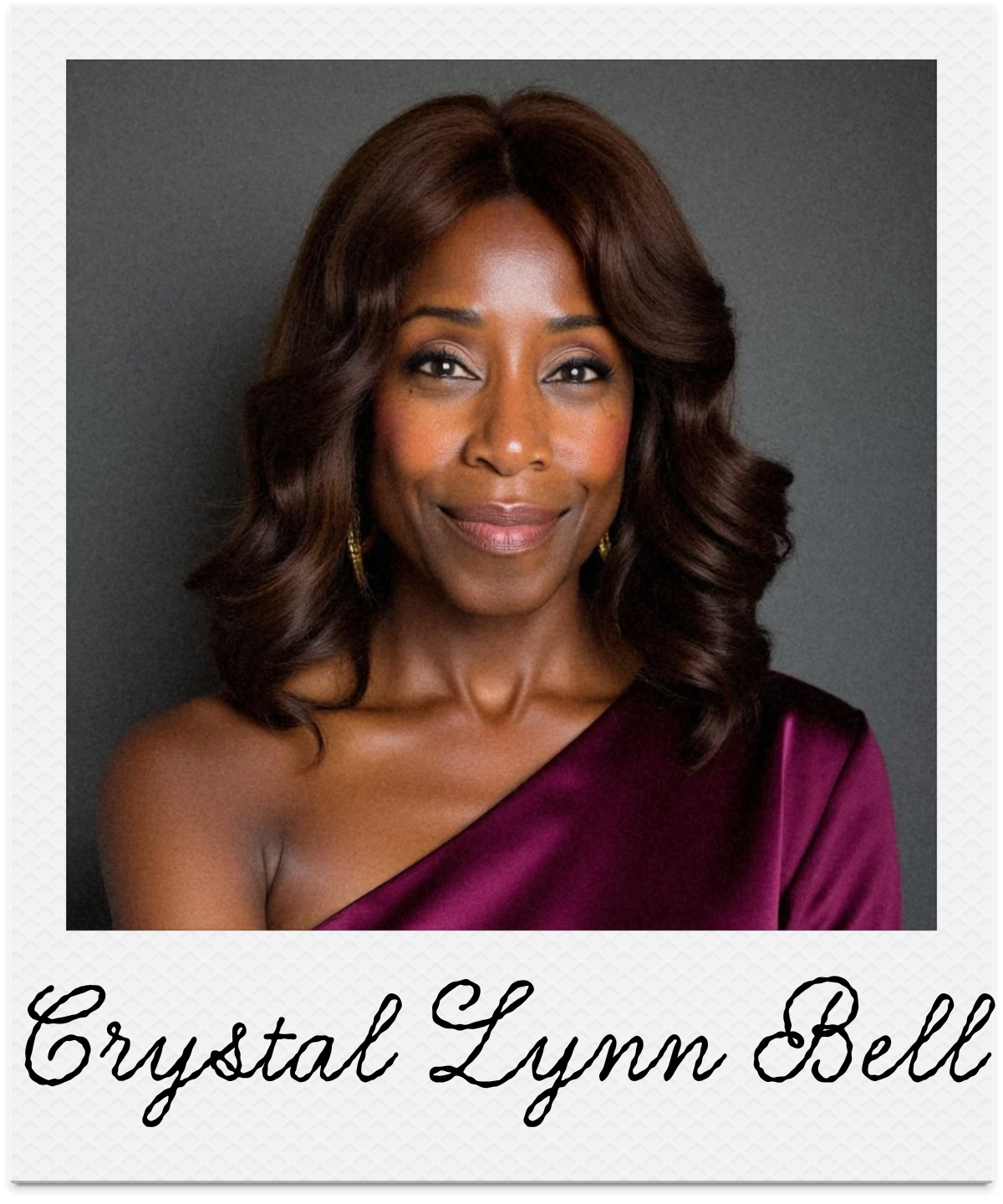
Crystal Lynn Bell
Founder of Badass Butterfly Alchemy
Visit www.badassbutterflyalchemy.com →Crystal Lynn Bell is a Spiritual Business Mentor, visibility coach, and founder of Badass Butterfly Alchemy Coaching. Her work sits at the intersection of deep inner transformation and serious business architecture. Since 2011, she has guided more than 800 women through the process of building coaching businesses grounded in their genuine experience and designed to produce real, sustainable income.